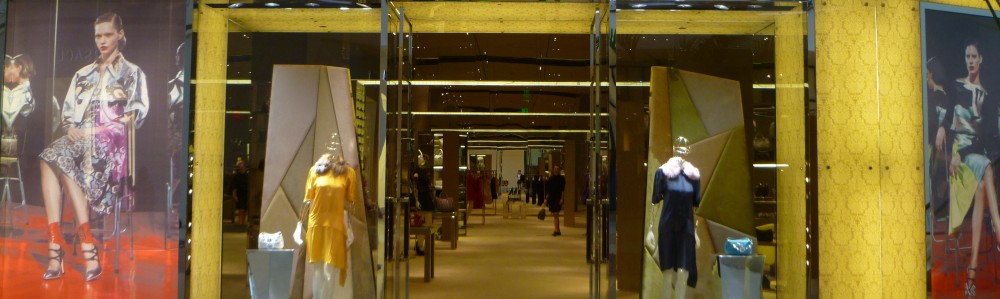
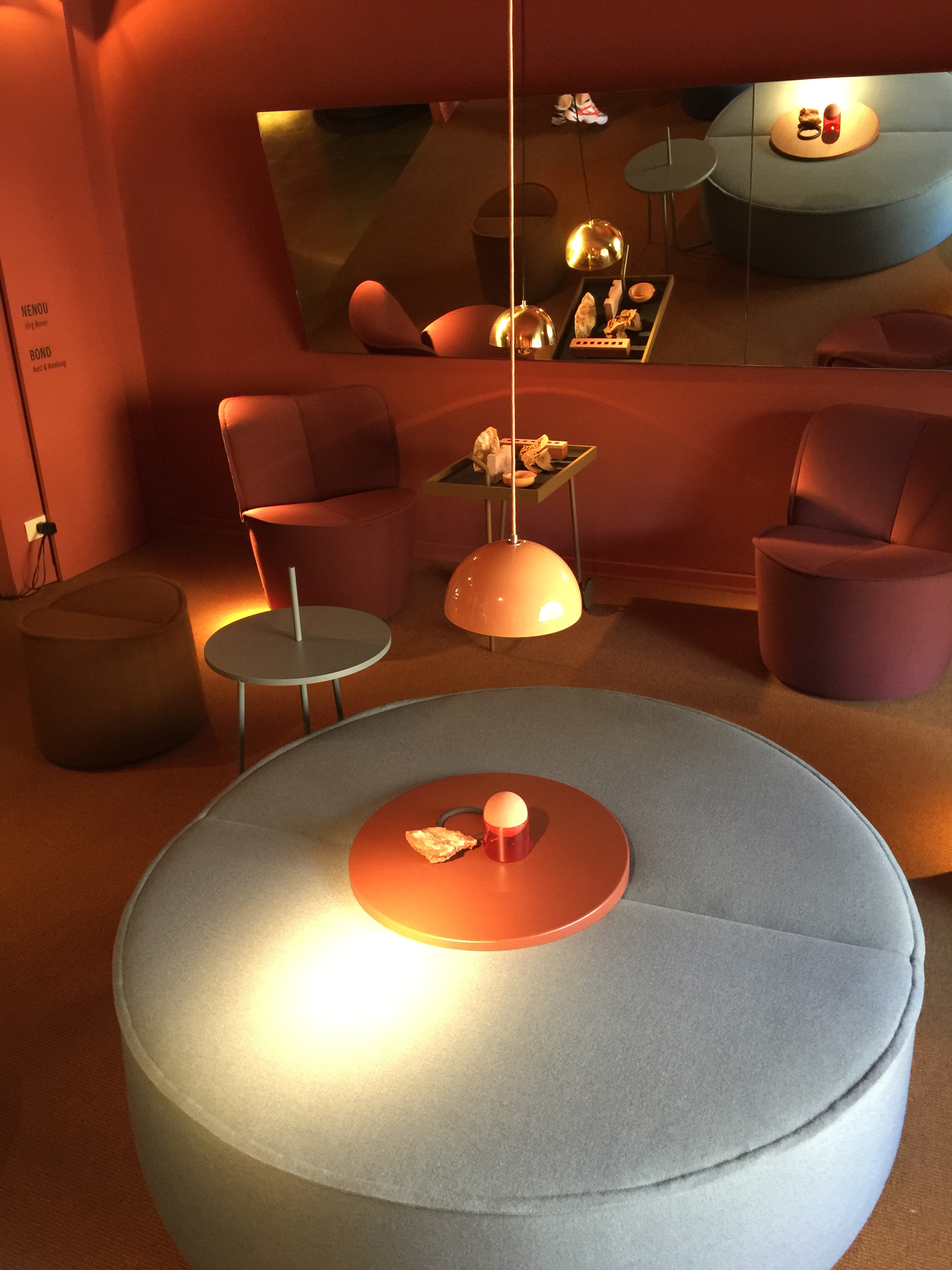
 On reflection of Milan while homeward bound to Australia I can definitely say that Design Week literally transformed the streets of Milan like the city’s Fashion Week never did. Design Week cannot be considered an exhibition in the traditional sense, although the Fieramilano Showgrounds outside the city would have resembled that aspect of commercial enterprise. From my observations, what attracts more than 300,000 visitors to Milan for 6 days in April is the transformation of ordinary spaces and streetscapes into temporary stages/venues for showcasing leading design concepts. These are not simply a few pieces of furniture or bathroom-ware idly positioned to fit a space, but to provide an event experience that reflects the creativity and innovative use of marble or wood or new materials. This concept hails from 1965 when exhibiting companies wanted more flexibility in showcasing their innovations, to the extent that in 1979 one company left their exhibition booth empty but from it promoted a shuttle service to take interested delegates directly to their warehouse for a personalised experience. This led to the creation of the Fuorisalone that supported dressing up spaces around the city and opening up the design concepts to local Milanese as well as international visitors.
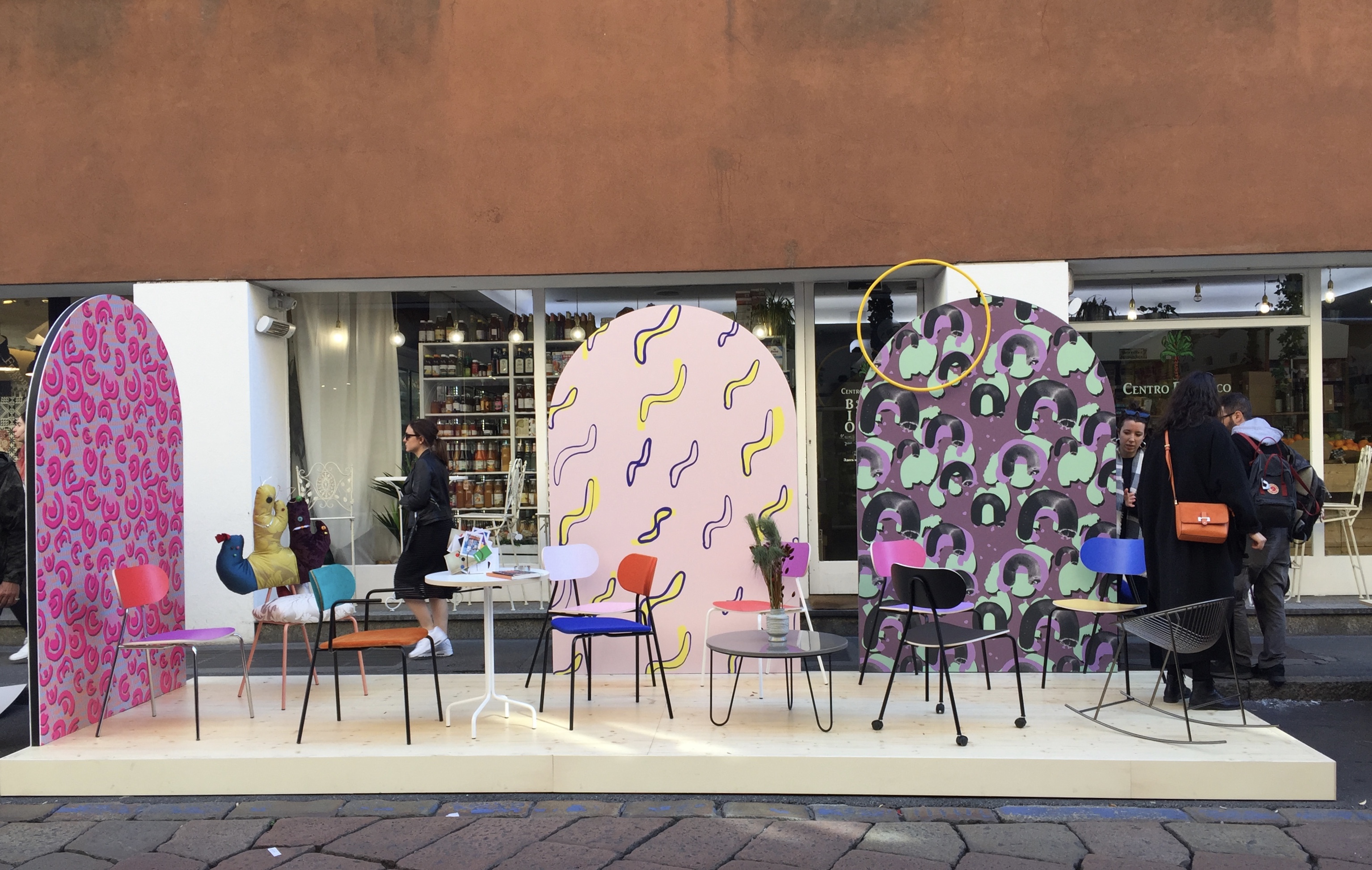

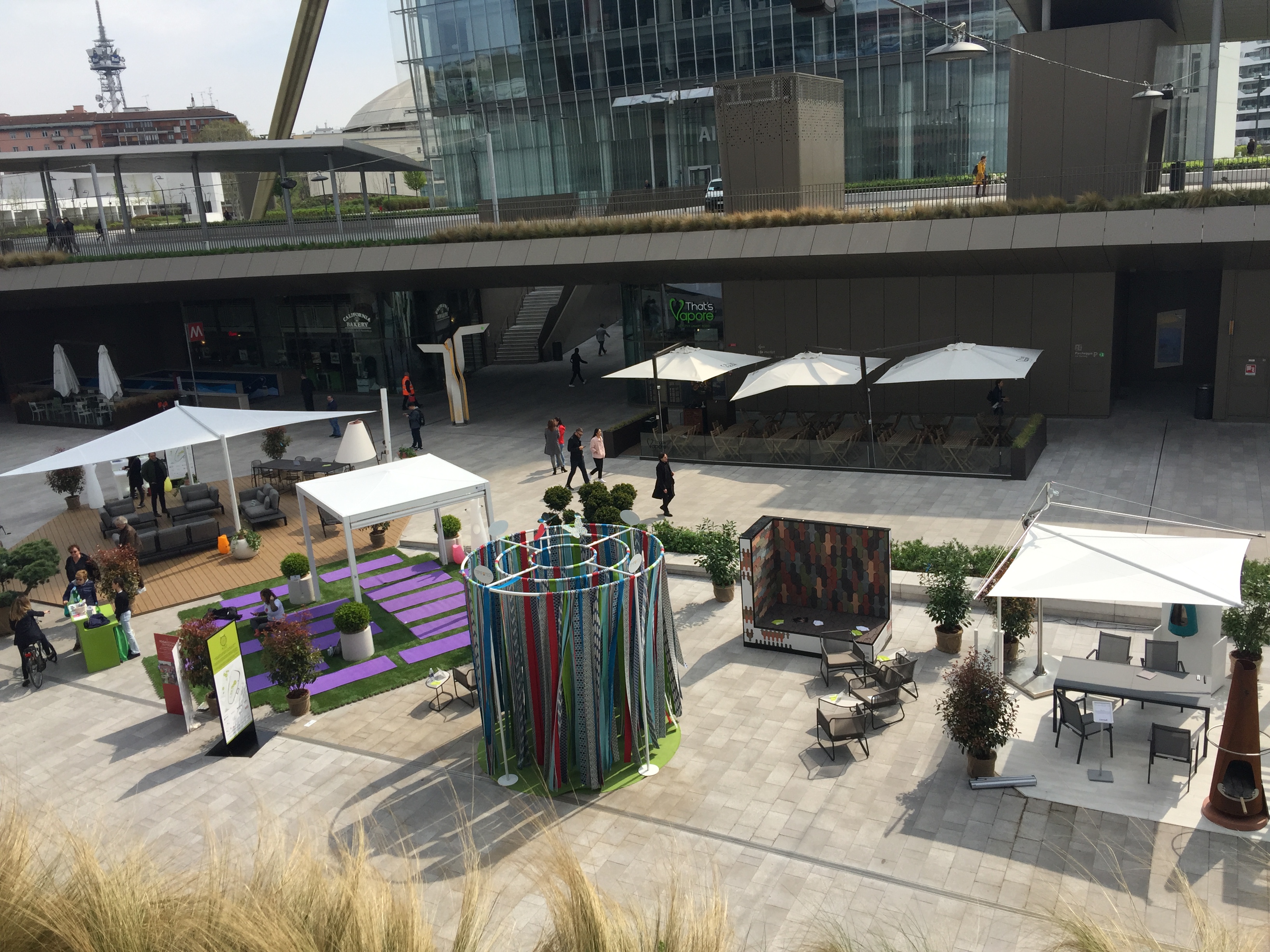
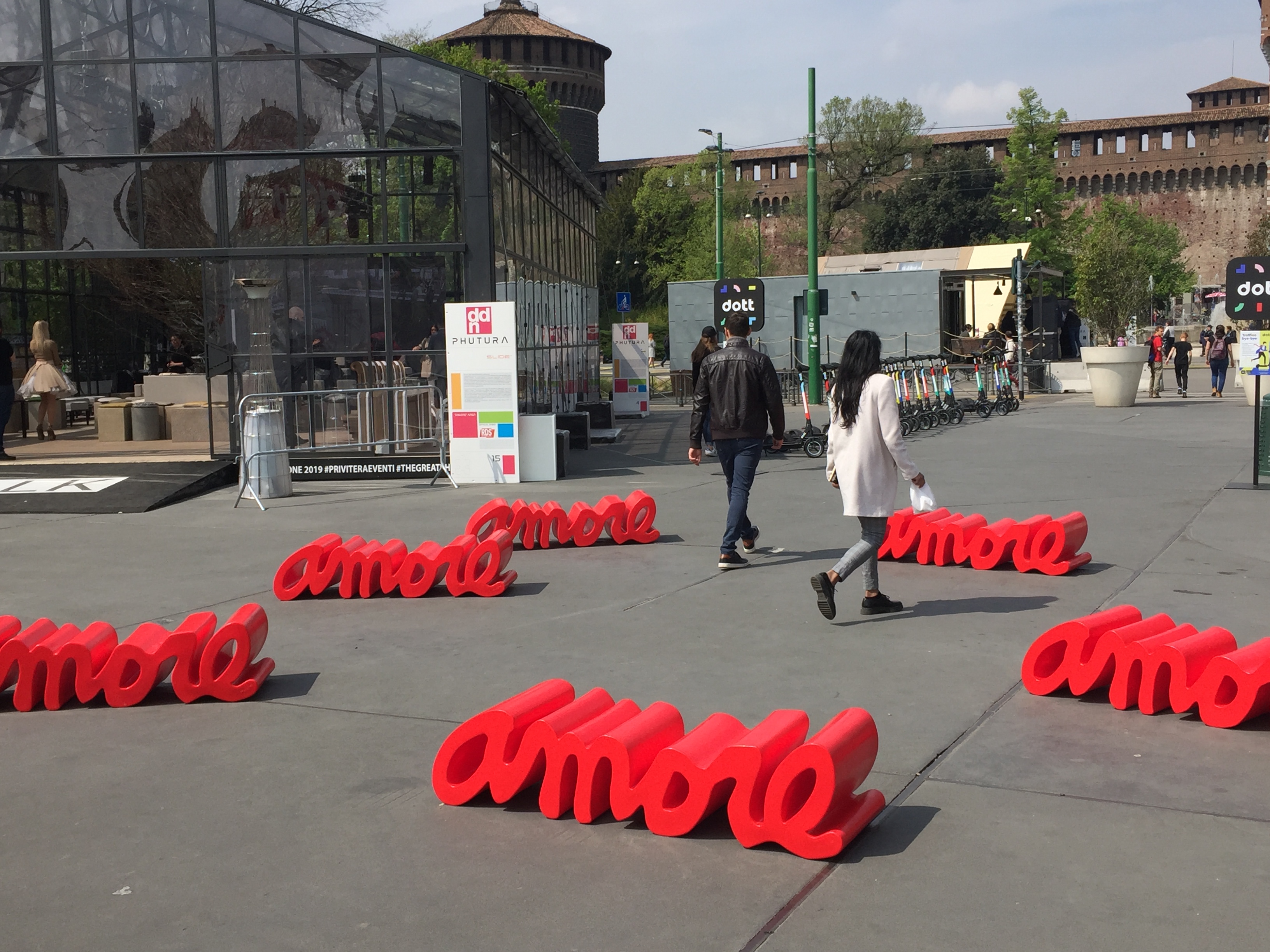 Historic precincts such as the Brera Academy hosted pop-up installations, forecourts of train and metro stations were utilised, cafe walls were rented by artists. This activity attracted major consumer brands – Nike, Nokia, Prada. This year’s exhibits by Sony with their robot-dog and Samsung were extravagant! Also for the first time pharmaceutical company Novartis showed in the Tortona design district.
 Design Week also included design competitions. One of my fellow students, Yui Akagi (who is also an accomplished ballroom dancer), helped her architecture colleagues from the University of Tokyo complete an exhibit of an imitation of a famous Japanese tea-house. Its innovative design whereby the floating floor movement created by an occupant, which in turn affected the frame through tension on wires interlaced through a series of pulleys, was designed to illustrate the intimate relationship between occupant and environment, won the team first prize in their category.
Fuorisalone dates for 2020 are 20-26 April.


 Stylleque